

Maryland Supreme Court hears arguments on Towson University 2021 shooting case
By Sarah Sternhagen, Editor-in-Chief and D’Mari Dreher-Smith, Sports Editor
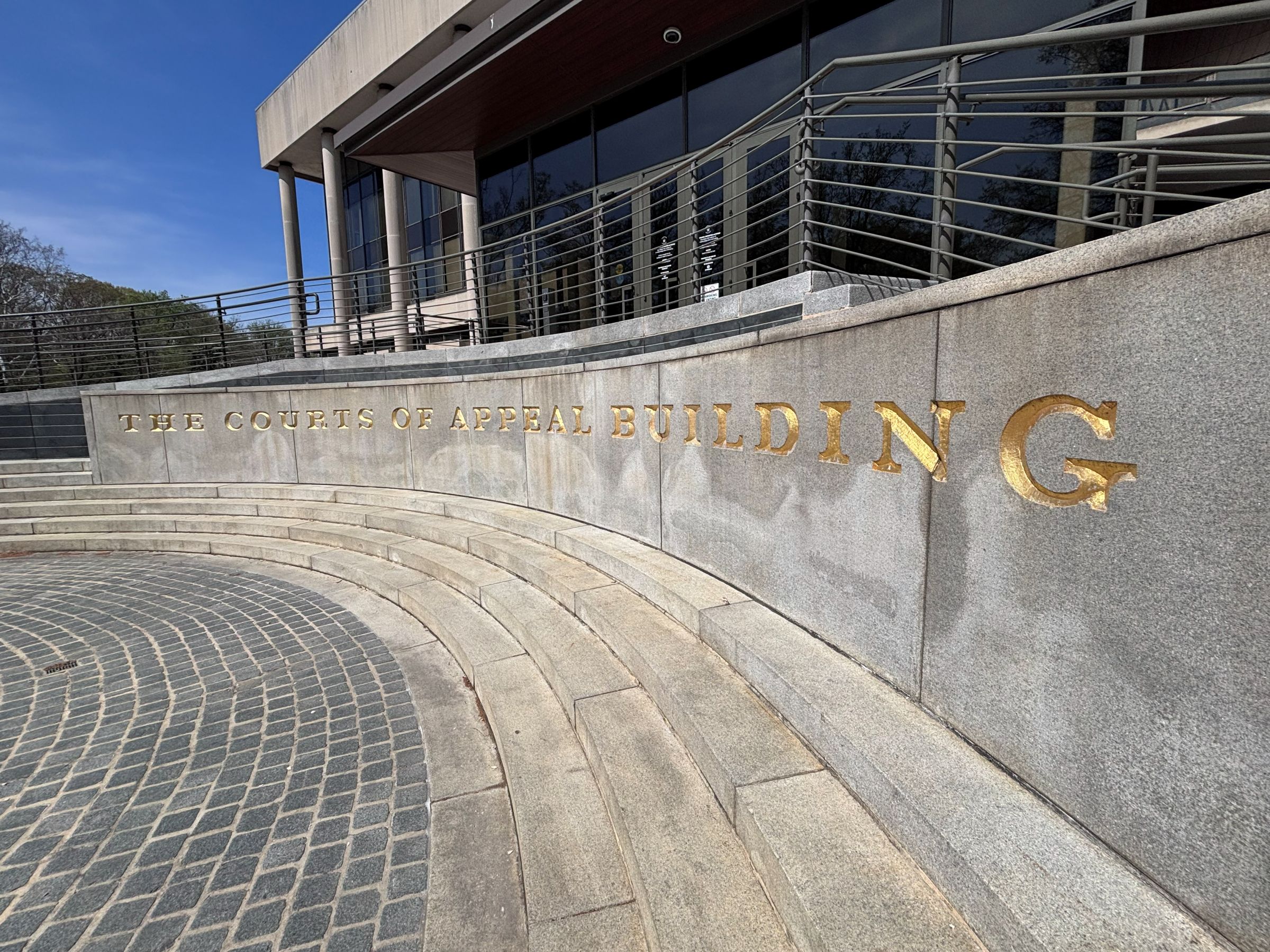
The Supreme Court of Maryland heard oral arguments on Thursday for Catherine Torney v. Towson University. The court is considering whether a lower court incorrectly applied Maryland law to Torney’s suit when considering a landowner’s responsibility to protect people on their property.
Torney, who was shot during an unsanctioned party in Freedom Square in 2021, sued the university for negligence in 2023, saying that university police failed to protect her. A lower circuit court dismissed the lawsuit because Towson “did not owe Ms. Torney a duty of care,” according to court documents.
If the Supreme Court rules in her favor, her lawsuit will be allowed to resume. If the court rules in Towson’s favor, the dismissal will stand.
Torney’s lawyer, Joseph Cammarata, started arguments and said that as a student on campus Towson was responsible for keeping Torney safe during the party, even if it was unsanctioned.
Cammarata argued that a shooting falls within the “general field of danger” that landowners, in this case Towson, are aware of and therefore need to protect people on their property from. He said that a shooting in a large, unruly gathering is a foreseeable threat the university should have responded to.
Assistant Attorney General Ryan Dietrich argued, on behalf of Towson, that the incident wasn’t foreseeable. He said that smoking, drinking and loud music at a party isn’t an indicator that someone would have a gun.
Cammarata said the university itself showed that it foresaw violence possibly erupting at the party because Towson University Police Officers were present at the pop-up party.
According to court documents, two of the four TUPD officers that were dispatched to the party recommended that the supervising officer take action to shut the party down after it grew from 100 to 400 people between 11 p.m. and midnight. The supervising officer did not shut the party down and the gunman opened fire around 2 a.m. Police never identified the shooting suspect, according to the Baltimore County State’s Attorney’s Office.
“The university wants to change the definition of foreseeability. They want to eliminate the ‘fore’ F-O-R-E, and make it just ‘seeability,’” Cammarata said.
He said just because officers didn’t see a gun or hear a threat, that didn’t mean they couldn’t foresee violence breaking out.
Dietrich maintained his stance when questioned by Justice Shirley M. Watts on whether there were indications that a greater police involvement may have been necessary, and if officers were “undoubtedly” aware of this.
“They were standing by because they were monitoring that party,” Dietrich said. “They didn’t know anyone was armed at the party, and then they didn’t know that there was violence that was impending or imminent.”
He also pointed out another large, unruly pop-up party that occurred only days before on Towson property where no violence occurred. He said that shows Towson had a recent example of an unsanctioned party that did not end in violence.
The justices also questioned both lawyers early in their arguments on Torney’s status as an invitee or a licensee on Towson’s campus, which are legal distinctions that determine a high or low duty of care from the landowner respectively.
The lawyers agreed to refer to Torney as an invitee for the sake of argument in the lower courts. Several justices still probed at how the duty of care Towson owed Torney would change if she was considered a licensee.
The Supreme Court of Maryland’s opinion will be issued at a later date.