
Meet the candidates for Towson University’s first dean of the College of Graduate Studies
Towson University held open forums for its College of Graduate Studies dean candidates these past two weeks. The four candidates each presented and answered questions from attendees about what they would bring to Towson if selected as the first dean for the new college.
The College of Graduate Studies was created in late 2025 as a step towards Towson earning R2 status. R2 is a type of research distinction from the Carnegie Classification, which means a university graduates at least 20 doctoral research degrees each year, and has $5 million in research expenditures. From 2021-22 Towson had $8.78 million in research spending, and awarded 16 research doctorates.
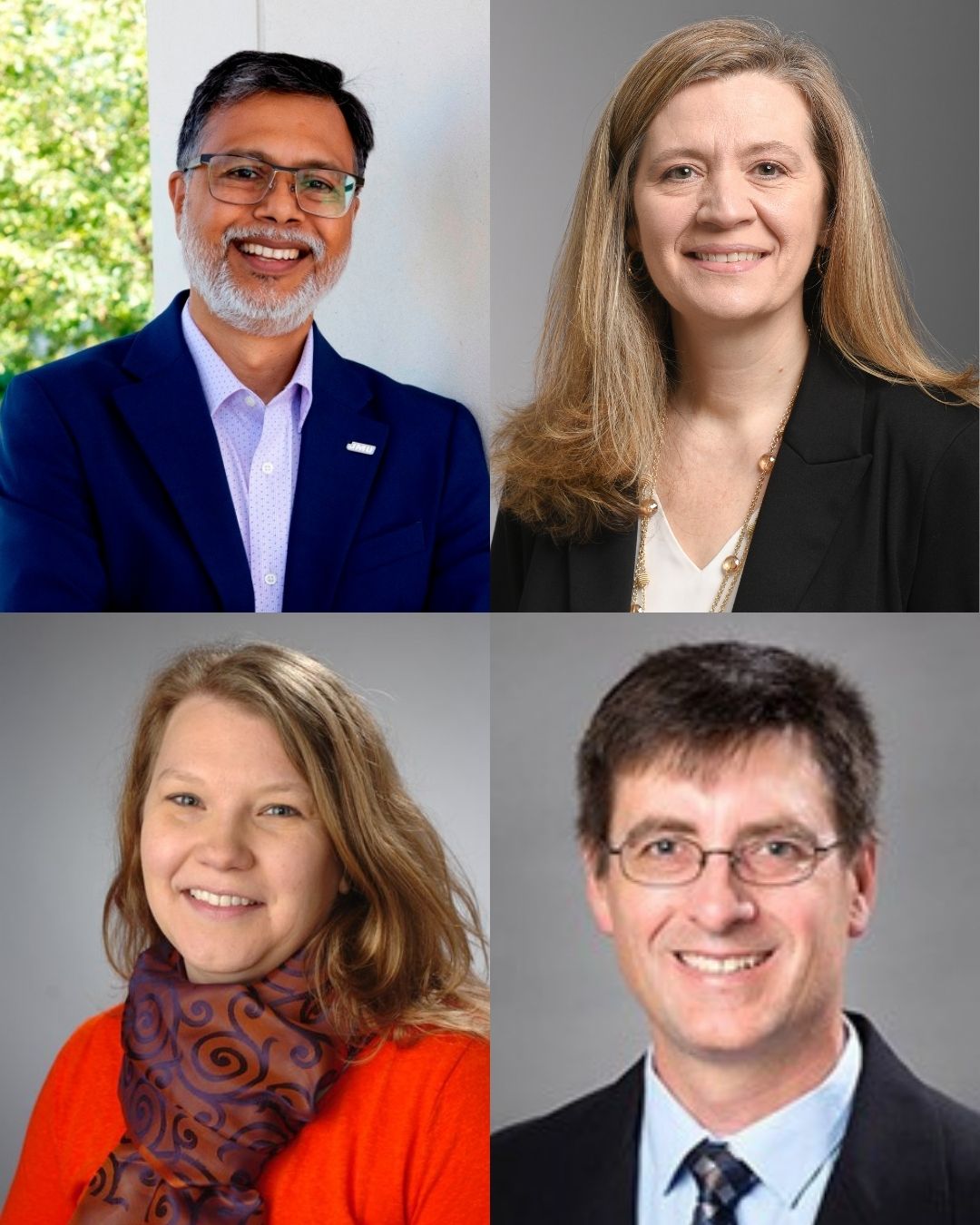
Summaries of the four dean candidates are below.
Amy Criss – By Sarah Sternhagen, Editor-in-Chief
Amy Criss is the chair of the Department of Psychology at Syracuse University, and currently on a rotating shift as a program director at the National Science Foundation. She has a joint PhD in Cognitive Psychology and Cognitive Science from Indiana University.
Criss presented to attendees on how she’d like to facilitate cross-discipline work at the graduate level. She said it makes better use of resources and stops duplicate courses from emerging in different programs.
Criss also said she was interested in providing graduate students chances to enter entrepreneurship, because it’s a way to translate research from a lab into the world through something like small business development.
“I think entrepreneurship training is a really good space to allow graduate students to think of that,” Criss said.
Attendees asked Criss about her thoughts on declining international student enrollment, and she said that while it’s an unfortunate reality at the moment, it just means Towson will have to look locally for students interested in graduate programs.
Criss is excited about the chance to help Towson build a graduate college from the ground up.
“There’s a lot of opportunities and we can sort of think about things from the very beginning in terms of supporting students,” Criss said. “That is sometimes difficult to do when everything’s established.”
Kristian O’Connor – By Kamaiyah Lineberger, Contributing Writer
Kristian O’Connor is currently serving as the associate vice provost for research at the Joseph J. Zilber College of Public Health at the University of Wisconsin-Millwaukee, which has a R1 classification for very high research activity. During his time at UWM, O’Connor led the university to an increase of research spending by almost 20% over three years..
O’Connor also served as interim graduate school dean at UWM for two academic years which he said gave him a deep understanding of graduate education. He has a PhD in Exercise Science from the University of Massachusetts Amherst.
When talking about why he’s interested in coming to Towson University, O’Connor mentioned similarities between his current university and Towson. He pointed out the similar sized undergrad population and their respective university missions.
“There’s a kind of positive momentum here and goals, and that’s something that’s attractive, to be a place that’s trying to get to the next level and to be a part of that,” O’Connor said.
In his presentation, O’Connor made a list of ideas that he has in order to help Towson’s graduate programs grow, as well as help it reach R2 status. Some of these ideas included more hybrid learning programs, alternative credential programs, digital accessibility and career-focused internships.
Laila Richman – By Morgan Lane, Senior Editor
Laila Richman is Towson’s current associate dean in the College of Education and has worked at Towson since 2011 in various faculty and staff roles. She has a PhD from the University of Kansas in Special Education.
Richman, who referred to herself as a “big systems person,” talked about the importance of implementing systems and interdisciplinary programming that will meet the needs of the community, students and staff. All while making sure those interdisciplinary opportunities make sense for the people engaging in them.
Attendees asked Richman about her thoughts on international students as part of Towson’s graduate program. Richman said she imagines providing online graduate classes to meet the needs of international students while waiting for more ideal circumstances in recruiting them.
“There is an increased interest, according to surveys of international students, who want fully online American programs,” Richman said.
Richman emphasized the need for connection between graduate students and faculty, as lots of focus goes into supporting undergrads while graduate students can get left behind. She also sees the role of dean of graduate studies as vital in being a bridge between different colleges and programs.
“I see my job as removing barriers,” Richman said. “I see you telling me something, and I talk with another dean, and another dean. And then me coming and saying, ‘here’s what I see.’”
Ayasakanta Rout – By Sarah Sternhagen, Editor-in-Chief
Ayasakanta Rout is the current head of the Department of Communication Sciences and Disorders at James Madison University. There he manages a department that has 24 full-time faculty members, a $2.8 million grant portfolio, and oversees his own research lab. His PhD from Purdue University is in Audiology and Speech Sciences.
“I have a simple philosophy,” Rout said during his presentation. “We train our graduate students as our future colleagues.”
Rout brought up several ideas for improving the graduate student experience at Towson. He floated the idea of establishing a graduate research center where students would take similar data analysis classes to cut down on duplicate classes across courses. He also brought up creating a graduate life center, a concept he borrowed from Virginia Tech, which supports graduate students with their full time jobs or families.
Attendees asked Rout his thoughts on international student enrollment, and he said marketing to them is still a key recruitment strategy for graduate programs. In response to a question about dealing with finite faculty resources, he said there are ways to offload faculty workload through strategic course planning.
Rout said he wanted to come to Towson because of the campus’s supportive culture.
“The support for each other and the pride for this university, that’s foundational,” Rout said. “People have been here for a long time, that tells me that this is an amazing place to be.”