

How The Diamondz are ‘cultivating a new tradition,’ bringing a piece of HBCU culture to Towson
By Morgan Lane, Editor-in-Chief
Nearly 10 years ago, Towson didn’t have a majorette dance team.
In fact, most non-historically Black colleges didn’t. But a cultural shift is expanding majorette-style dancing to universities across the nation.
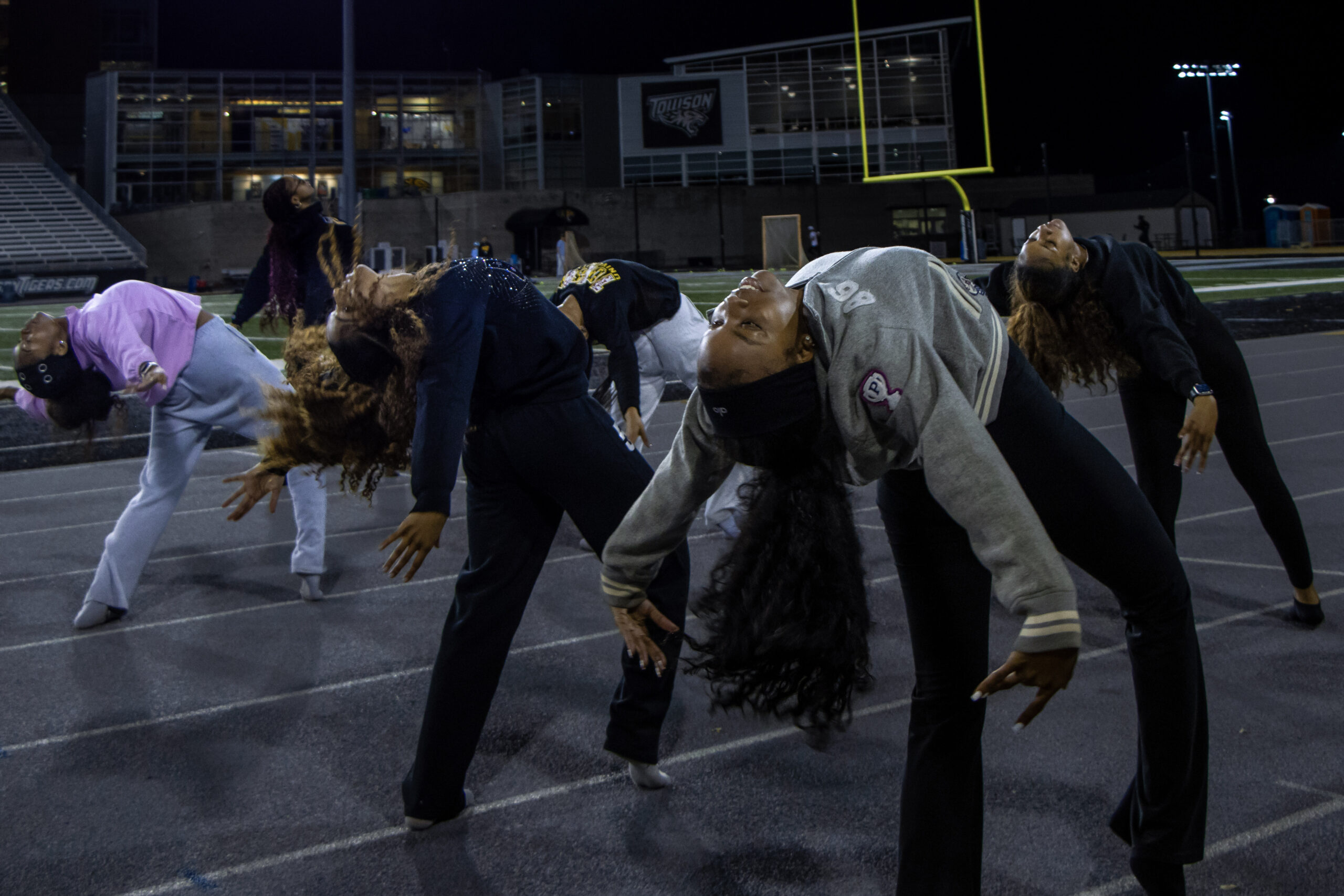
Since 2017, The Diamondz, Towson’s majorette dance team, has squeezed itself into the crowded metal stands during football games, making their presence known with synchronous, slow and rhythmic movements.
But unlike traditional college dance teams, they don’t rehearse in a studio.
They practice on the track in Johnny Unitas Stadium.
The Diamondz spend over six hours a week practicing around 15 routines, repeating eight counts until 10 p.m. as the rest of campus quiets down for the night.
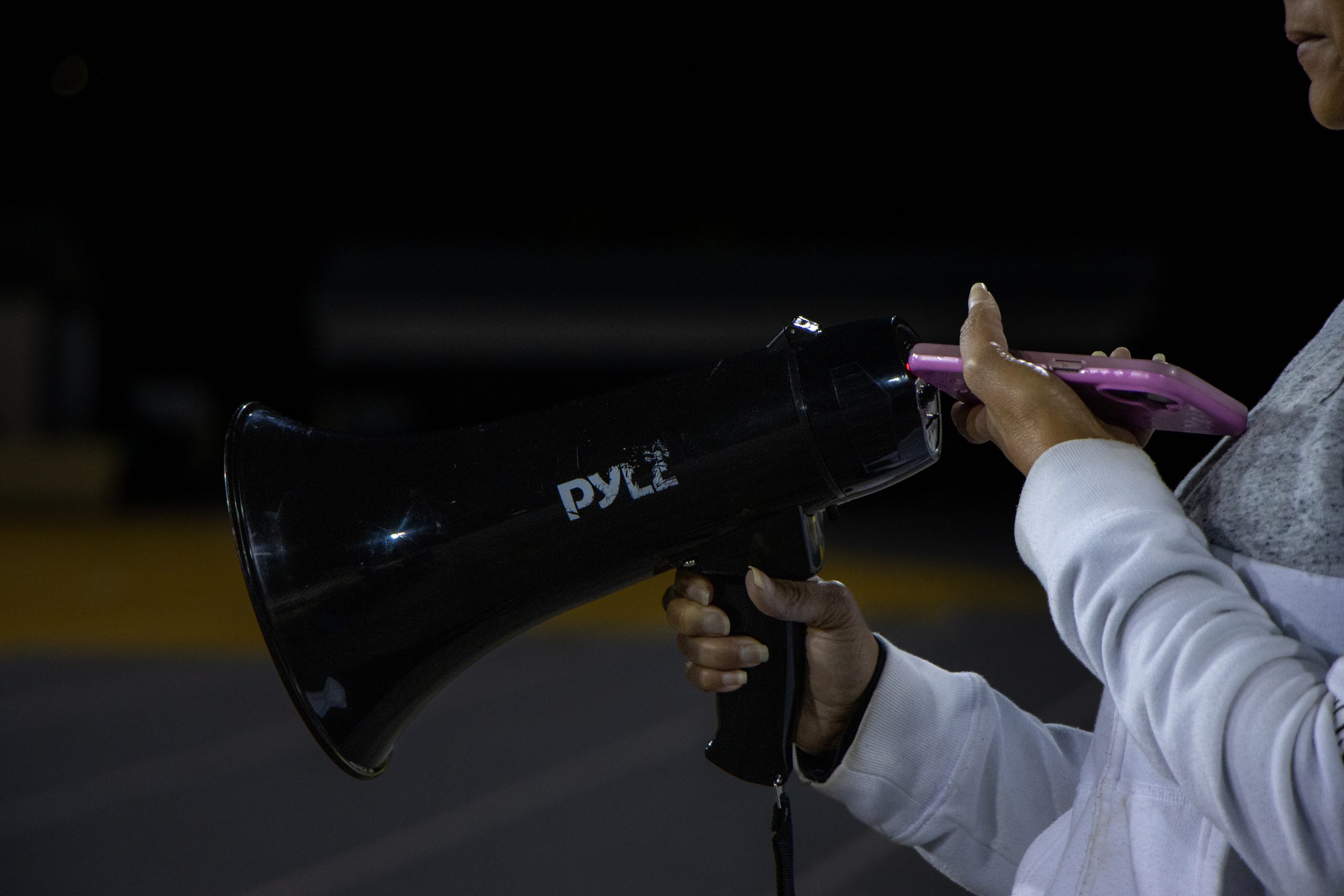
Repetition, especially for dancers that don’t have a lifelong background in the sport, is what Diamondz President and senior dance captain Amaris Brown focuses on most during practices.
She particularly tells her team to stay in sync, keep their spacing tight and execute dramatic body movements.
“I come from a very technical background,” Brown said. “We’re definitely elevating every single year on, you know, making sure that we get mostly dancers, if not only dancers, on our team, so that we can keep going in the right direction that we’ve been going.”
Brown has been dancing for her entire life and has years of ballet, modern and West African dance training. Her expertise, alongside adjunct professor and the team’s technical assistant coach, Tracie Burton-Hooper, has given newer dancers the chance to focus more on intricate, precise movements.
Burton-Hooper is a Towson alumna who also has a deep history of dance experience. She was a member of the Towson Dance Company before graduating in 1993, when Towson was still considered to be a predominantly white institution.
The lifelong dancer has seen the evolution of diversity at the university, including the introduction of HBCU-style majorette dancing.
She described her experience at last year’s homecoming, where someone said Towson having a majorette team was “epic.”
Yet, Brown said not everyone understands majorette culture at a school that doesn’t have historically Black traditions.
“We definitely have a slight disadvantage because of the fact that like, a lot of people don’t understand the culture,” she said.
The team dances in the bleachers with the university’s marching band, which does corps-style marching rather than the HBCU show-style performance.
Yet, unlike HBCU majorettes, The Diamondz don’t have access to perform at halftime alongside the band and color guard.
“We’re about to hit our decade year, and it’s insane how we just now were able to like, start dancing with the band at the end of 2025. Like that’s crazy,” Brown said.
Freshman Amira Wilson, who is also the vice president of The Diamondz, said majorette dance and Black dance culture doesn’t make someone incapable of excelling in other types of dance.
“We’re something new that’s coming to show Towson that even though we’re Black, we’re still fully capable to do all the dancing and everything else that anybody else is capable to on this campus,” she said. “We bring an element that’s different from other things that are going on during the games.”